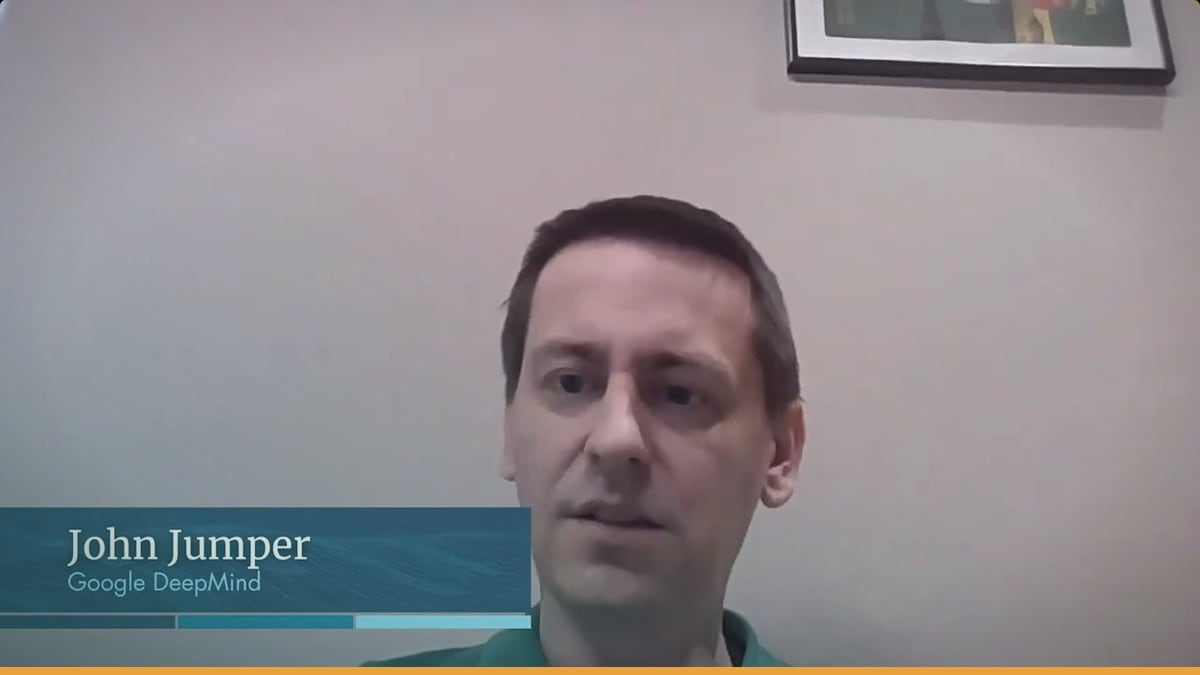
Header image: John M Jumper Google DeepMind (14 Sep 2024) – img 03_-_img_03.jpg) by National Academies – Earth and Life Studies, CC BY 3.0, via Wikimedia Commons — cropped to 16:9 and colour-adjusted.
Key takeaways
- Google DeepMind creates an institute to surface AGI disagreements
- Hassabis and Amodei warn AGI could arrive within years
- The institute risks becoming performative without clear mechanisms for dissent
Google DeepMind just launched the DeepMind Institute. No fanfare. No white paper. Just a quiet admission: the AGI conversation has outgrown backrooms and corporate spin. This isn’t another think tank—it’s Google conceding that AGI’s trajectory is too uncertain, too consequential, too contested for any single entity to control. The bet? Institutionalized dissent might accelerate progress. The risk? It could deepen fractures in an already divided field.
Why Now?
The timing isn’t random. AGI timelines are collapsing under their own hype. Demis Hassabis and Anthropic’s Dario Amodei warned AGI could arrive within the next few years. Not decades. Not generations. A horizon close enough to demand immediate action. This isn’t abstract futurism—it’s near-term disruption with real stakes. Labor markets, regulatory frameworks, geopolitical power—all scrambling to adapt to a technology that doesn’t exist yet but might rewrite everything.
Google’s move looks defensive. And it is. The DeepMind Institute flips that script. Instead of pretending to have all the answers, Google is saying: No one does. That’s a gamble. Exposing internal disagreements could invite regulatory scrutiny, spook investors, or trigger talent raids. But it might also defuse the narrative that Google is unilaterally steering AGI’s future—a story that’s become politically toxic.
The urgency isn’t just optics. Hassabis and Amodei’s warning wasn’t just about AGI’s arrival. It was about the lag in societal adaptation. Labor markets, they argued, may struggle to keep pace once AGI accelerates. That’s not a distant concern—it’s a looming crisis. The institute’s launch suggests Google recognizes the window for proactive debate is closing. If AGI arrives before the world agrees on how to talk about it, the fallout won’t just be technical. It’ll be existential.
A Platform for Disagreement
Here’s the radical part: the DeepMind Institute is designed to surface disagreements, not suppress them. The brief explicitly states it will “surface differing views” between Google, DeepMind, and the global research community, acknowledging upfront that “participants will not always agree.” That’s not just refreshing—it’s almost unheard of. Tech giants don’t institutionalize dissent. They paper over cracks with PR, not formal platforms for debate.
The question is whether this is substantive or performative. The brief doesn’t specify how disagreements will be surfaced. Public white papers? Closed-door debates? Some hybrid model? Will dissenting voices have real influence, or will they be relegated to footnotes in a Google-approved narrative? The lack of detail is telling. If the institute is serious, it’ll need to avoid the trap of “controlled opposition”—where outsiders are invited to speak but not to shape outcomes.
Still, the mere existence of the institute is progress. The DeepMind Institute could force these factions into the same room, not to reach consensus, but to clarify where their disagreements actually lie. That alone would be a win. A structured forum for dissent could sharpen the discourse—assuming Google lets it.
Who’s Steering the Ship?
The institute’s leadership reflects its ambitions—and its tensions. Three directors: Shane Legg, James Manyika, and Demis Hassabis. Each represents a distinct power center within Google’s AGI ecosystem.
Shane Legg, DeepMind’s co-founder and the institute’s managing editor. His role suggests a focus on curating, not dictating, the debate. That’s crucial. Legg’s involvement could ground the institute’s work in technical reality, not just corporate messaging.
Then there’s James Manyika, Google’s executive. His inclusion hints at broader ambitions. AGI isn’t just a technical challenge—it’s an economic, social, and political one.
Finally, Demis Hassabis. His presence underscores the institute’s credibility, but it also raises questions about its independence. Hassabis is a Google executive. Can the institute challenge Google’s priorities without alienating its own leadership? The brief doesn’t say, but the tension is inevitable.
The trio’s diversity is a strength, but it’s also a liability. The real test will be whether this leadership team can navigate those tensions—or whether they’ll devolve into infighting, leaving the institute paralyzed.
The AGI Timeline: A Looming Disruption
The DeepMind Institute’s launch isn’t just about philosophy. It’s about timing. Hassabis and Amodei didn’t just predict AGI’s arrival—they warned that labor markets may struggle to adapt once it accelerates. That’s a bombshell. Hassabis and Amodei’s warning suggests the disruption is imminent, not hypothetical.
This is AGI’s most underdiscussed risk. The institute’s brief doesn’t detail how it will address labor impacts, but its existence implies a recognition that the status quo isn’t sustainable. The institute could fill a critical gap by bridging technical roadmaps with socioeconomic realities, but only if it moves beyond abstract debates.
The challenge is that labor market disruption isn’t just a policy problem. It’s a political one. AGI threatens to upend high-skilled professions too—law, medicine, even software engineering. The institute’s ability to shape this conversation will depend on whether it can translate technical uncertainty into actionable policy recommendations. If it fails, the debate will be left to politicians and pundits, neither of whom have a great track record with nuance.
The Adaptability Paradox
That’s a rare admission from any institution, let alone a tech giant. AGI research moves fast, and today’s certainties often become tomorrow’s relics. The institute’s emphasis on adaptability suggests it’s trying to avoid rigid dogma, but it also raises a thorny question: How do you maintain credibility while constantly revising your stances?
The brief doesn’t specify how the institute will handle evolving positions. Will it publish versioned white papers? Retract outdated claims? Adopt some other mechanism? The absence of detail is concerning. If the institute becomes a weathervane—swinging wildly with every new breakthrough—it’ll lose trust. If it’s too rigid, it’ll become irrelevant. The sweet spot? A willingness to update views without abandoning core principles.
This adaptability paradox isn’t just logistical. It’s philosophical. The institute’s ability to navigate those disagreements will depend on whether it can distinguish between evolving views and flip-flopping. The former is intellectual honesty. The latter is chaos. The brief doesn’t say how the institute will make that distinction, but it’s a make-or-break issue.
Inclusion or Co-optation?
The DeepMind Institute’s ambition is to engage the “global research community,” but the brief is frustratingly vague on how. Will it be an open platform, where anyone can contribute? Or will it be invite-only, with Google curating the debate? The difference matters. DeepMind’s research?
If the institute is serious about surfacing diverse perspectives, it’ll need to avoid performative openness—where outsiders are heard but not heeded. That means more than just publishing papers. It means actively seeking out dissenting voices, even those that challenge Google’s priorities. It means creating mechanisms for feedback, not just top-down dissemination. And it means being transparent about how decisions are made.
The risk is that the institute becomes a Google-branded echo chamber, where the “global research community” is just a euphemism for a handful of handpicked academics and industry insiders. That would undermine its credibility and reinforce the perception that AGI research is dominated by a small, self-selecting elite. The brief doesn’t say how the institute will avoid that fate, but it’s a critical question.
Measuring Success
The brief doesn’t outline concrete milestones, outputs, or success metrics for the DeepMind Institute. No timelines. No deliverables. No benchmarks. That’s not necessarily a red flag—new initiatives often start with ambiguity—but it does make it hard to assess whether this is substantive or just PR.
So how should we measure its success? Publications, citations, media coverage—those are easy to game. A better approach might be to look at the quality of the disagreements it surfaces. Does the institute force researchers to clarify their assumptions? Does it expose gaps in current AGI frameworks? Does it produce actionable insights, not just academic papers?
The real test will be whether the institute can move beyond abstract debates and into the messy, practical trade-offs of AGI development. Safety vs. speed. Centralization vs. decentralization. Corporate interests vs. public good. These aren’t just philosophical questions—they’re decisions with real-world consequences. If the institute can help navigate those trade-offs, it’ll earn its place in the AGI discourse. If it can’t, it’ll fade into the noise of AI ethics initiatives—another well-intentioned but ultimately toothless effort.
The most interesting open question is whether the DeepMind Institute will force Google to confront its own contradictions. The institute’s explicit embrace of dissent suggests Google recognizes that tightrope is getting harder to walk. But recognition isn’t enough. The question is whether Google—and the broader AGI research community—will actually listen.