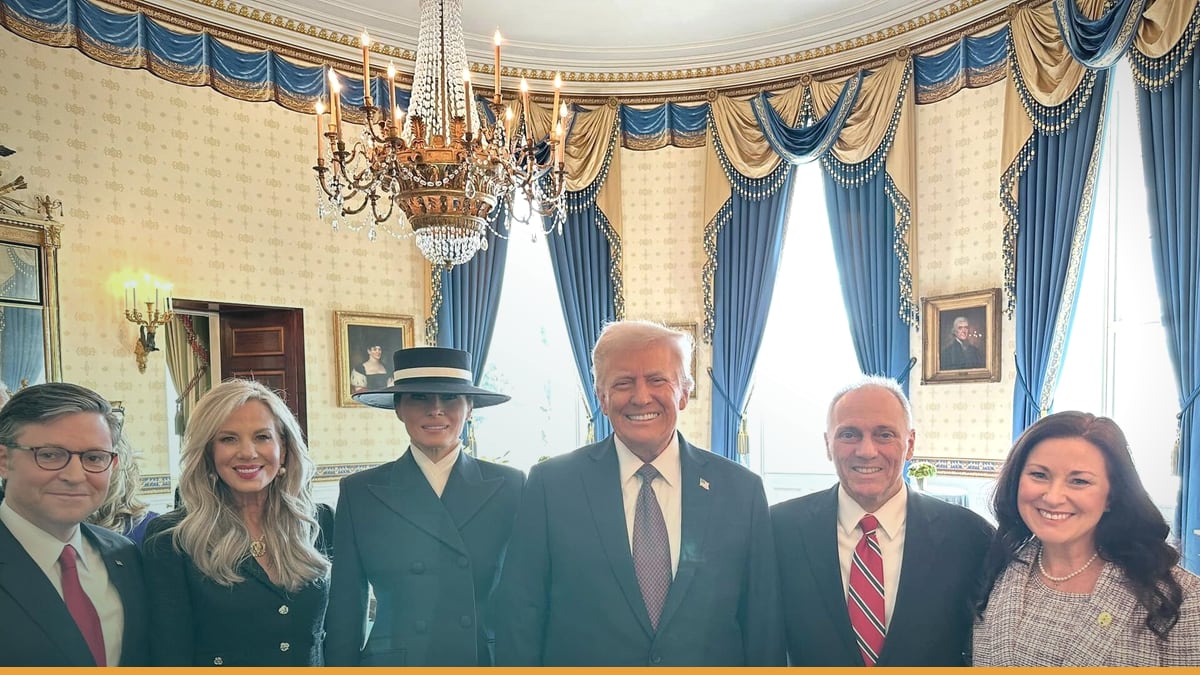
Header image: Mike Johnson and Donald Trump with others (January 2025).jpg) by Office of Speaker Mike Johnson, Public domain, via Wikimedia Commons — cropped to 16:9 and colour-adjusted.
Key takeaways
- Anthropic CEO Dario Amodei joins Sam Altman and Elon Musk in calling for paced AI development.
- Trump and Mike Johnson warn slowing AI could let China overtake the US.
- OpenAI is exploring the legality of an industry-wide AI development slowdown.
Yesterday, Anthropic CEO Dario Amodei threw a lit match into the AI community’s powder keg. In an open letter, he declared it’s time to pace the frontier and slow down AI development. This isn’t just any opinion; it’s a call to action endorsed by heavyweight figures, including OpenAI’s Sam Altman and Elon Musk.
Amodei isn’t beating around the bush. He’s spotlighting the potential risks of rapid AI development: losing control over advanced models and even existential threats. OpenAI’s chief scientist, Jakub Pachocki, backed this up. He argues we need to coordinate to slow down future development and is exploring whether an industry-wide slowdown would even be legal.
But Donald Trump and House Speaker Mike Johnson aren’t on board. They’ve labelled the AI executives as overreactive and are sounding the alarm about China. In their view, pausing AI development could allow China to outpace the US, posing a serious national security risk. “Slow and lose,” they say. Some AI executives share this concern, believing that staying ahead of China in AI is crucial for national security and economic competitiveness. The AI competition between the US and China is real and heating up. Both countries are pouring billions into AI, each trying to maintain—or gain—the upper hand.
OpenAI’s inquiry into the legality of an industry-wide slowdown adds another layer of complexity. Can tech giants legally agree to slow down? Lawyers and policymakers are scrambling. The regulatory environment is patchy. The EU is way ahead with its AI Act, setting a high bar for safety and ethical use. These regulations will inevitably influence the debate.
Increased transparency could help. Independent audits of advanced AI models would ensure we know what we’re dealing with. International cooperation on AI safety standards is a must. Initiatives like the Frontier Model Forum and the Partnership on AI are already working on this but need more support. Governments can fund research into AI safety and help establish international agreements that don’t favour one nation over another.
One path leads to potentially uncontrollable AI advancements with risks we can’t yet fully comprehend. The other risks falling behind in a critical technological race with serious geopolitical implications. The industry needs to weigh these risks seriously, and coordinated action might be necessary — but it won’t be easy given current geopolitical tensions.
The big question now is: Can we innovate responsibly without ceding ground to our global competitors? What will the international community do to foster cooperation instead of competition? The answer will shape the future of AI — and perhaps, the future of humanity.