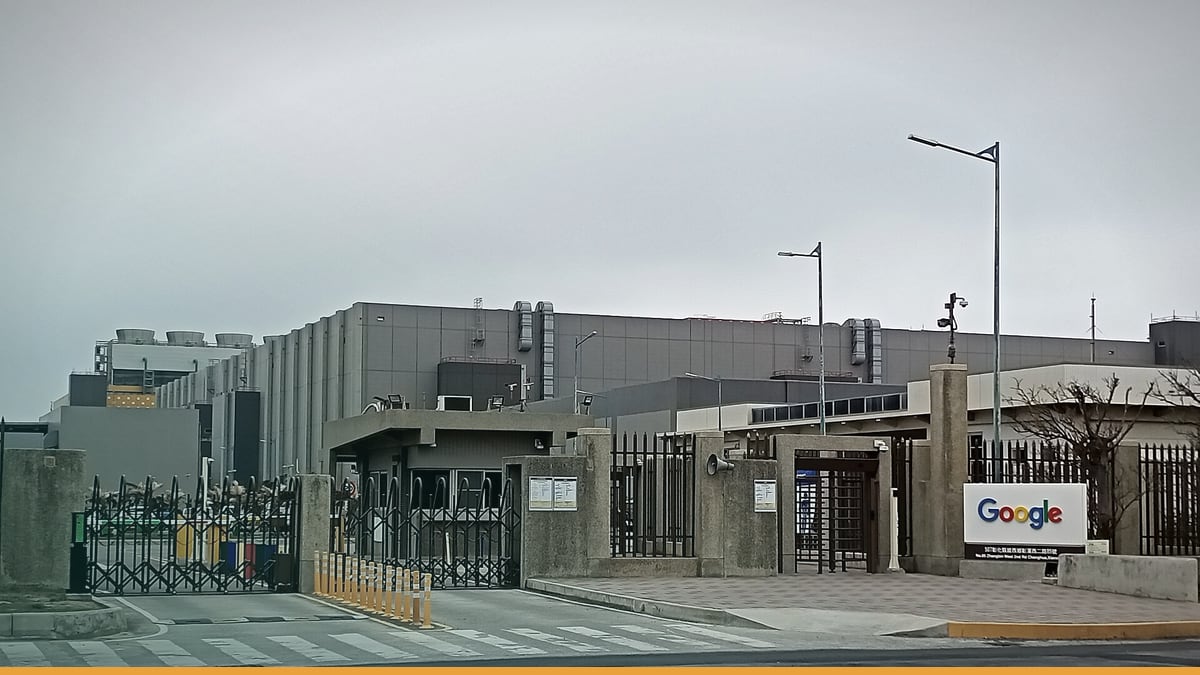
Header image: Exterior view of the main gate, Google’s Taiwan data center in Xianxi, Changhua, as taken on 7 March 2021 by Kai3952, CC BY-SA 4.0, via Wikimedia Commons — cropped to 16:9 and colour-adjusted.
Key takeaways
- Gemini 3.8 Live scores 82.6 on Speech to Speech Quality Index, leading in real-time voice processing.
- Extended Thinking enables simultaneous reasoning and speech for complex enterprise workflows.
- Adoption depends on system integration, not just benchmark performance.
Gemini 3.8 Live and Gemini 3.8 Live Extended Thinking are out. Two voice models. One number: 82.6 on Artificial Analysis’ Speech to Speech Quality Index. That’s not a nudge. That’s the first voice model that doesn’t feel like it’s lagging behind you.
68.6% on τ-Voice. 35.1% on τ-Voice-banking. Second in the Speech Agent Arena. These aren’t just wins. They’re proof Google’s building for a different kind of conversation—one where the AI starts working before you finish talking.
"Live" isn’t a gimmick
Most voice assistants treat chat like tennis. You serve. They return. Gemini 3.8 Live Extended Thinking? It’s playing chess while you’re still explaining the rules.
Simultaneous reasoning and speech. You’re mid-sentence, describing a problem, and the model isn’t just listening—it’s already mapping solutions. That’s not an upgrade. That’s a rewrite.
The onboarding demo shows it. A new employee asks about a form. It sees the form, processes the context, answers in real time. Or the React example: sketch a UI, describe what you want, and the model spits out code mid-conversation. That’s not Q&A. That’s teamwork.
Where this sticks
This isn’t about asking Gemini to play your workout mix. The use cases are enterprise:
- Multi-step bookings that don’t derail.
- Background function calls while you keep talking.
- Real-time troubleshooting in Search Live.
Early partners—Salesforce, Genspark, Lumeris—aren’t just testing. That’s the signal. When companies start bending their processes to fit an AI, it’s not a demo anymore.
The catches
Extended Thinking isn’t for everything. It’s built for complex workflows, not quick tasks. Google’s selling it as enterprise-grade. It feels like it—powerful, but overkill for setting a timer.
Pricing is "competitive. " That’s a hole. If this is the future of real-time collaboration, we need to know what it costs.
And let’s be honest: this is evolution, not revolution. Gemini 3.8 Flash already pushed reasoning and coding. Impressive? Yes. Unpredictable? No.
The real test
Can this change how we work, or is it just another benchmark win?
The tech is slick. Simultaneous reasoning. Continuous visual processing. SynthID watermarking. That’s not polish. That’s a foundation.
But adoption won’t ride on benchmarks. It’ll ride on integration.
They might be right. The question isn’t whether Gemini 3.8 Live Extended Thinking can think alongside us. It’s whether we can build systems that let it.